A special breed.
Among alpine meadows, mountain flowers and snow-covered peaks.
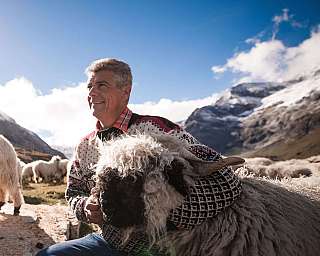
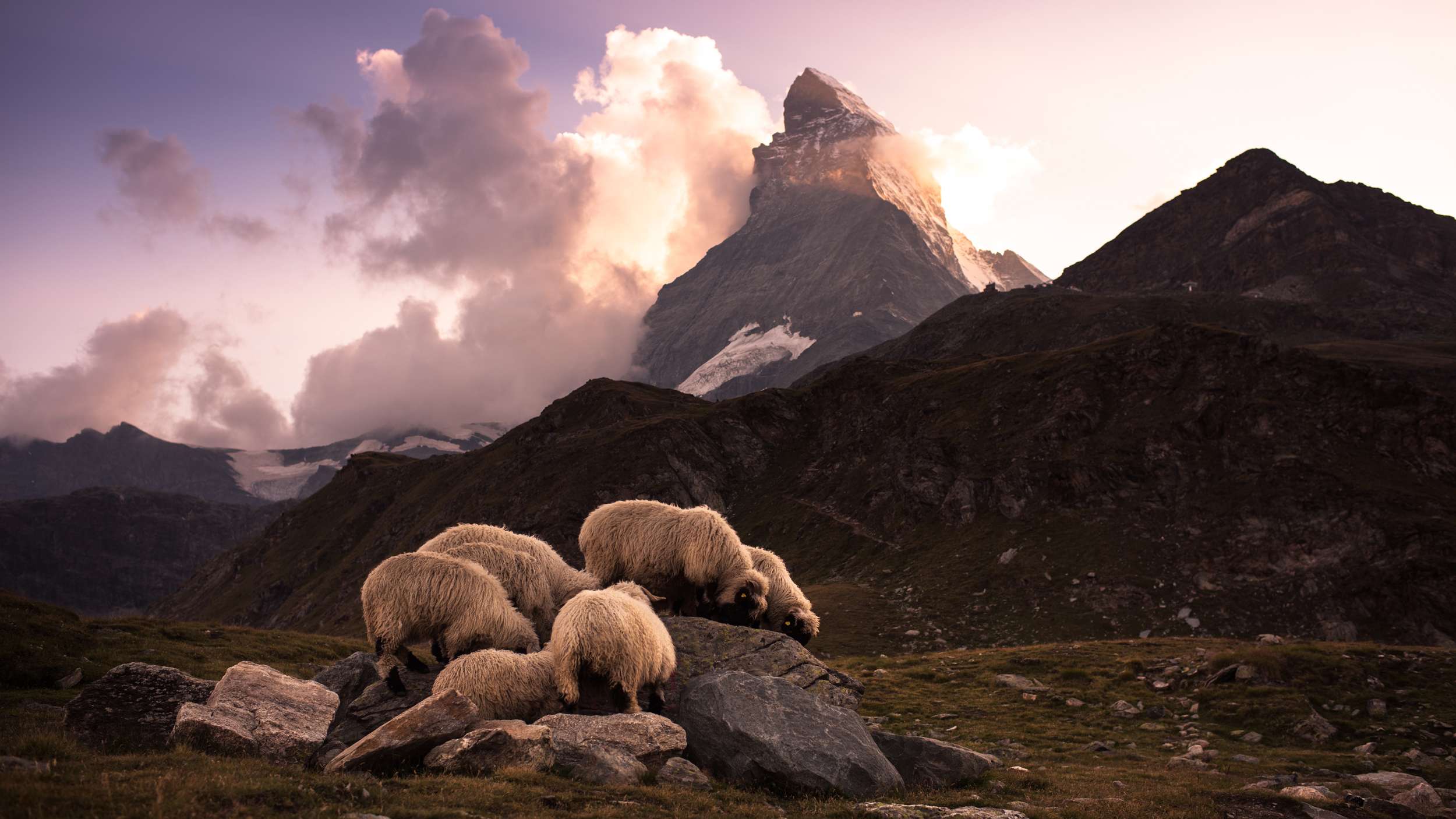
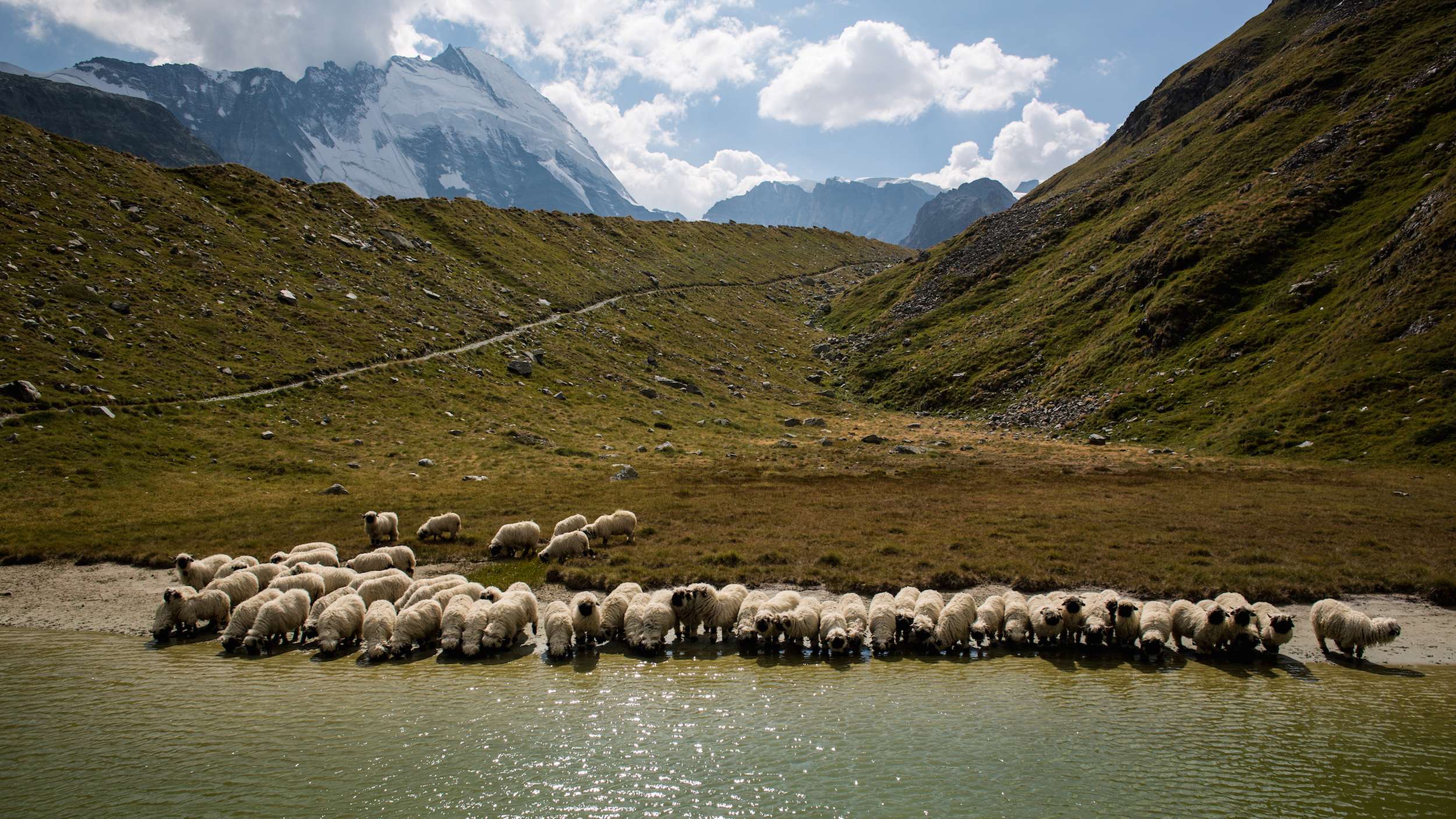
“When the alpine meadows in Zermatt are lush green, the mountain flowers bloom in the most vivid colours, and my sheep graze peacefully in front of the snow-covered mountains with their long wool washed white by the summer thunderstorm, I couldn't be happier. For me, that is home.”
Paul Julen speaks with shining eyes about his great passion: sheep.
SPECIAL ANIMALS.
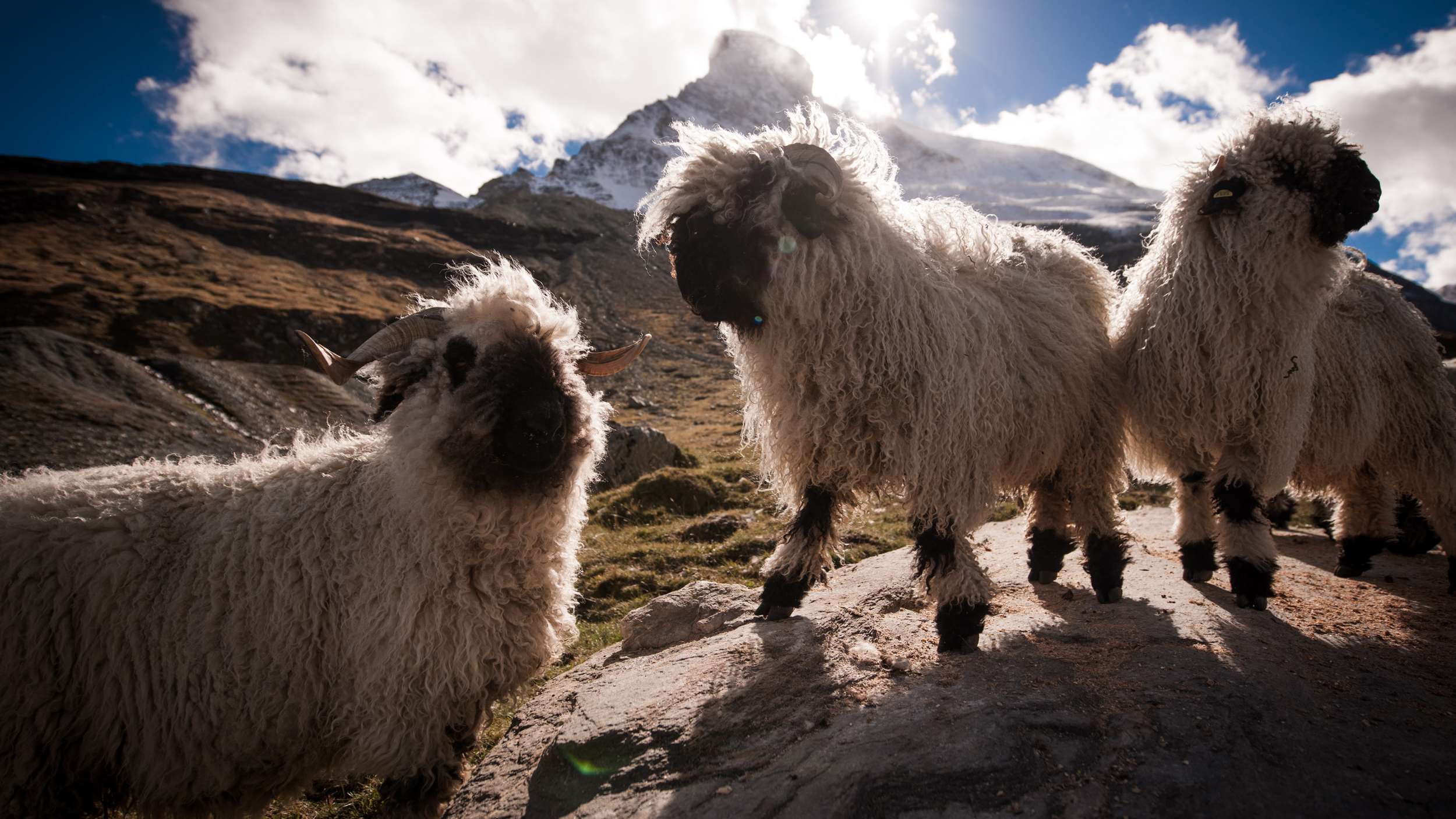
Spiral-shaped horns, long white wool, black markings on the legs and the characteristic black colouring on the head – the Valais Blacknose sheep belong to Zermatt just like the mountains themselves.
For Paul Julen, they are far more than farm animals. They are part of his home, his passion and the Julen tradition.
SHEEP MUNCHING - Experience our Blacknose sheep up close.
Anyone who wants to get closer to the animals has the opportunity to do so at certain times of year:
WINTER · Sheep shed visit mid-December to mid-April
Every Wednesday we offer guided visits to the sheep shed. Here you can get to know our Blacknose sheep and get very close to them – including stroking and cuddling the sheep.
→ Discover the guided sheep shed visit
SUMMER · Meet the Sheep approx. mid-July to early September
In summer, our sheep are not in the shed, but enjoying their freedom on the alpine pastures at Gornergrat.
At «Meet the Sheep», you can experience the animals in their natural surroundings – with the Zermatt mountains as a backdrop.
→ Exact dates & information at Gornergrat
AND IN BETWEEN? The sheep are on holiday.
In May, June, September, October and November, the animals are out and about in the mountains.
During this time, the sheep are without GPS trackers, which is why even our reception teams do not know where they are at present. Unfortunately, we can also not provide any information on the whereabouts of other shepherds’ animals.
The sheep shed therefore remains closed from mid-April to mid-December and cannot be visited during this time.
We ask for your understanding – and look forward to bringing you close to our sheep again in winter or summer.
FROM THE VALLEY TO THE ALP. A passion you can feel.
For Paul Julen, being a shepherd means above all one thing: experiencing home.
When the sheep graze in summer in front of the Valais mountains, the meadows are in bloom and the peaks in the background are covered with snow, a landscape becomes a home.
That is Zermatt. That is Tradition Julen.
World’s largest Blacknose breeding
When Paul Julen bought eight of the traditional Valais Blacknose sheep together with his brother in 1972, he had no idea how it would influence his life.

None of them had any knowledge of sheep back then. They had to learn everything from scratch. Today, with 300 animals, Paul Julen owns the largest breeding herd of this breed in the world. «However, I do not just want to breed them. Our guests should learn something about the culture and life in the mountains through them.»
Every year, the Julen family has 100 lambskins «tanned», on the one hand so that guests in their restaurants can sit softly, and on the other because the skins are gladly bought as holiday souvenirs. The 1200 kg of wool that the sheep produce each year are also further processed. This creates warming blankets for the guests. «So that we can embroider the blankets with our Tradition Julen logo using our own wool, we are fortunately also always able to have a black sheep in the herd», explains son Paul-Marc. He too is captivated by the Schwarznasen and enjoys it when he finds time in between to visit the animals with his boys Jarno and Rajan.

The sheep spend the winter months in the barn on the edge of the village. An opportunity for the Julen family to bring their animals even closer to their guests. Since December 2013, the sheep in the barn have been open to visits, and either Paul or Paul-Marc can share interesting facts about the Black-nosed sheep and traditional farming. The guests enjoy a good glass of wine, cheese and meat from their own stock.
The meat of the Black-nosed sheep is a special delicacy and is also enjoyed by guests who otherwise do not eat lamb. «This is due, among other things, to the fact that the animals find the best herbs at this altitude», explains Paul Julen. Around 180 lambs and 30 ewes are slaughtered each year. But that is still not enough to meet the needs of their catering businesses. Demand for the lamb specialities is high and the excellent quality of the meat is known far beyond the country's borders. That is why they buy additional lambs from shepherd friends.
Even if Paul Julen repeatedly struggles to load his animals up for the trip to the slaughterhouse – it comes with the territory. And when around 200 young animals romp about every year during the «Lämmlizeit», the circle closes again. «The fact that I can combine my work as a host with my passion for my sheep is a gift. If I were only with the animals, something would be missing for me. If I were only among people, the same.» It's good that Paul Julen does not have to choose one or the other. Because it is no different the other way round: his sheep would miss him, and his guests would too.